
Is Lee Jae-Myung Sliding Toward Japan-Style Church Dissolutions or Simply Rallying His Base?
By Rev. Demian Dunkley
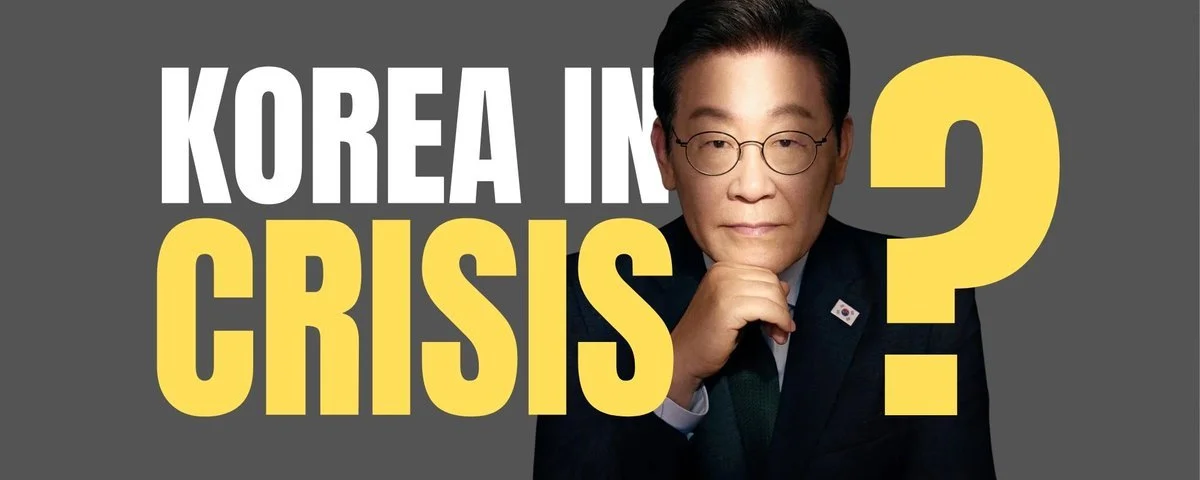
On December 2, at a Cabinet meeting in the presidential office in Yongsan, President Lee Jae-myung instructed his ministers to examine whether South Korea should adopt legal mechanisms similar to Japan’s dissolution of a religious corporation. He described the organized political intervention of certain religious foundations as a constitutional violation and ordered the Ministry of Government Legislation to review what institutional tools would be needed to make dissolution possible. He also called for an execution plan that would spell out which ministries should act and what legal changes would be required. He warned that if such activity is left unchecked, Korea could face social conflict at a level he compared to a religious war.
At almost the same time, Pastor Mark Burns was meeting with Dr. Hak Ja Han, the Mother of Peace, in the Seoul Detention Center. She asked him to tell the world what is happening in Korea, not only to her personally but to churches and people of faith across the nation. It is hard to ignore the symbolism. While an eighty-two-year-old religious leader in fragile health appealed for the truth about Korea to be known, the President was instructing his Cabinet to research how the government might acquire the power to dissolve churches.
These two moments, unfolding simultaneously on opposite sides of the capital, raise a serious question. Is South Korea’s leader moving toward Japan-style measures against religious groups, or is he simply rallying his political base at a sensitive moment?

President Lee Jae-Myung - Cabinet meeting. December 2, 2025
What President Lee Actually Said
Korean media across the spectrum reported the same core points.
President Lee said there were cases where religious foundations had intervened in politics in an organized and systematic way, and that this violated the constitutional principle of separating religion and politics.
He pointed to Japan’s decision to seek and obtain a dissolution order for a religious corporation as an example worth examining.
He instructed the Ministry of Government Legislation to review institutional measures that would allow Korea to issue dissolution orders against religious foundations in similar circumstances.
He requested an execution plan and program setting out which ministries should be responsible and what legal steps would be necessary.
He warned that if such violations are left alone, the constitutional order could be damaged and social conflict could escalate to something similar to a religious war.
These are clear, deliberate statements, not a passing comment.
Understanding His Intentions
To interpret these remarks, we can consider how President Lee sees himself and how he has governed so far.
President Lee rose from severe poverty, worked in factories as a child, and later became a human-rights lawyer. He has often described his early life as a long struggle against injustice and entrenched power. That personal history shaped the political identity he carries today: a leader who believes he was forged in adversity and is now responsible for defending the Constitution from forces he sees as corrupt, elite, or dangerous. This self-image, combined with years of conflict with prosecutors, conservative media, and outspoken religious networks, helps explain why he views certain faith communities not as neutral actors but as political machines. It also explains his preference for strong structural solutions.
When President Lee perceives a threat, his instinct is to change the legal architecture rather than rely on informal dialogue. That mindset is deeply rooted in his own life narrative of overcoming systems he believed were manipulated against him.
He consistently presents himself as a defender of the Constitution against powerful networks that he believes have abused state institutions and public trust. He has a long and difficult history with certain conservative religious and political forces in Korea. He does not simply disagree with them. He tends to see them as organized political machines hiding behind religious status.
He also prefers structural solutions. When he sees a problem, his instinct is to create a new legal framework, expand investigative powers, or redesign institutions. That is how he is now approaching the question of religion and politics.
Several motives seem to be at work.
He wants to protect what he believes is the integrity of the constitutional order.
He has deep misgivings about conservative religious groups that openly support his political rivals.
He prefers legal and institutional controls over informal understandings.
He uses broad language that keeps his options open while signaling clearly enough for his supporters and critics to understand who he has in mind.
He did not say “Unification Church” out loud, but almost every Korean outlet treated his remarks as directed at the Unification Church and similar groups that are already under investigation.
Two Plausible Readings
There are two realistic ways to read what happened on December 2. Both are serious, and both have implications for Korea’s democracy.
1. A Real Move Toward Dissolution Powers
One interpretation is that President Lee is genuinely preparing the ground for new legal powers that could allow the government to dissolve religious corporations in certain cases.
The evidence is straightforward. He cited Japan’s dissolution of a religious corporation. He called the activity of certain religious foundations a violation of the Constitution. He instructed his legal ministries to review dissolution mechanisms. He asked them to prepare an execution plan, not just academic research.
If that is the direction, then Korea is contemplating the introduction of one of the most severe tools any democracy can use against a faith community. The international standard, including Article 18 of the International Covenant on Civil and Political Rights, requires that any restrictions on religious organizations be strictly necessary, proportionate, and not politically motivated. Dissolving a corporation that represents a religious movement tests the outer limits of that principle.
2. A Hard Signal to His Base and the Bureaucracy
A second interpretation is that President Lee is primarily sending a political and psychological signal.
The timing is telling. His remarks came one day after the opening of the trial of Dr. Hak Ja Han and in the middle of a broader confrontation between his administration and conservative religious voices. He did not name any group. He spoke in a way that resonates with supporters who believe conservative churches helped prop up what they see as a dangerous previous government.
Under this reading, he is reassuring his supporters that he is serious about keeping religion out of partisan politics, and at the same time nudging prosecutors and ministries to be bold. Even if he does not intend to pass a dissolution law tomorrow, he is normalizing the idea and putting it on the table.
Even if this is only signaling, the effect is real. When a president speaks about religious foundations as constitutional violators and possible sources of “religious war,” officials inside the system hear it clearly.

President Lee Jae-Myung - Cabinet meeting. December 2, 2025
To Bail or Not to Bail?
This brings us to the courts. The judge in charge of Dr. Han’s case must decide whether to grant bail to an elderly woman who has serious medical conditions and who has obeyed every summons. That decision should be based solely on law, facts, and humanitarian considerations.
However, it is naïve to pretend that the climate around the case has no influence. When the head of state has just described “religious foundations” as threats to the Constitution and called for research into dissolving them, it changes the emotional and political landscape. Judges are human beings. They operate inside a society, not outside of it.
I am not claiming that the President is directly telling the courts what to do. The concern is subtler. Judicial independence requires both freedom from direct interference and protection from the kind of public atmosphere that makes certain decisions far more costly than others.
When religious defendants are being discussed as potential threats to constitutional order, judges may feel pressure, even unconsciously, to err on the side of severity.
That is why the way leaders talk during ongoing trials matters so much.
Why This Matters Beyond Korea
For Korea’s allies, especially the United States, these developments raise important questions.
Dissolving a religious corporation is not a routine administrative step. It is an exceptional act with deep implications for freedom of religion and association.
Japan’s decision to seek and obtain a dissolution order remains controversial and is still under scrutiny by international experts.
Korea has binding human rights obligations, including protection of religious freedom and judicial independence.
The perception that courts are operating under political pressure, even indirect pressure, can damage public trust and international confidence.
The U.S.–ROK alliance is not just a military arrangement. It is a partnership grounded in shared democratic values that include the space for faith communities to exist without fear of being shut down for political reasons.
None of this implies that religious organizations should be above the law. They should not be. If there is evidence of real wrongdoing, it must be investigated and judged. The concern is about proportionality and about the tools that are being discussed at the very highest level of the state.
A Call for Prudence
South Korea has earned respect as a resilient and vibrant democracy. It does not need to copy the most contested policies of its neighbors in order to protect its Constitution. It can set a higher standard.
If the government is sincerely worried about collusion between religious bodies and partisan politics, there are many steps it can take that are compatible with democratic norms. It can clarify campaign laws, enforce transparency in political donations, and ensure that all groups, religious or not, are treated the same under the law.
Before it ever moves toward something as severe as dissolving a religious corporation, it should make sure that the climate is calm, that the courts are free from any perception of pressure, and that its actions fully align with its own Constitution and its international commitments.
The Mother of Peace asked Pastor Burns to tell the world what is happening in Korea. At the same time, her President was speaking about the possibility of dissolving churches in the name of the Constitution. The world is now beginning to listen. What it hears next will depend on how Korea chooses to balance its understandable desire for clean politics with the non-negotiable principles of religious freedom and judicial independence.
Below is a full briefing on today's comments.
December 2, 2025 – President Lee Jae-Myung Orders Review of Japan-Style Dissolution Measures Against Religious Foundations
1. Overview
On December 2, 2025, President Lee Jae-myung used a Cabinet meeting at the Yongsan Presidential Office in Seoul to:
1. Declare that organized political intervention by religious foundations constitutes a violation of the Constitution. 
2. Explicitly cite Japan’s dissolution order against a religious corporation as a precedent. 
3. Instruct the Ministry of Government Legislation (법제처) to examine institutional measures that would make dissolution orders against religious foundations possible in Korea, “as in Japan.” 
4. Order the preparation of a concrete “execution plan and program” for legal and institutional reforms, to be reported separately to the Cabinet. 
No specific religious organization was named in his quoted remarks; however, multiple major Korean outlets (Dong-A Ilbo, Hankyoreh, ChristianToday, etc.) explicitly interpret the comments as aimed at religious foundations currently under investigation, particularly the Unification Church (Family Federation for World Peace and Unification, FFWPU) and, in some analyses, Shincheonji. 
These statements come one day before the opening of a major trial involving Unification Church leader Dr. Hak Ja Han and while Busan Segero Church pastor Son Hyun-bo remains detained on election-law charges. 
2. Verbatim Policy Signals from Today’s Cabinet Meeting
2.1 Constitutional violation and separation of religion and politics
According to Edaily’s straight news report on the Cabinet discussion:
• President Lee “strongly criticized” the “organized political intervention” of religious foundations at the December 2 Cabinet meeting. 
• He stated that there are “cases where religious foundations have intervened in politics in an organized and systematic way,” explicitly tying these to violations of the principle of separation of religion and state. 
Edaily quotes him as follows:
• “정교분리 원칙을 헌법적 가치로 강조했다… 이를 위반하는 행위는 단순히 일탈을 넘어 헌법과 헌정 질서를 훼손하는 중대한 사안”
(“He emphasized the principle of separation of religion and state as a constitutional value… acts violating it are not merely deviations, but serious matters that damage the Constitution and constitutional order.”) 
Dong-A Ilbo reports similarly:
• “정교분리 원칙을 어기고 종교재단이 조직적, 체계적으로 정치개입한 사례들이 있다… 이는 헌법 위반 행위”
(“There are cases where religious foundations, in violation of the principle of separation of religion and state, have intervened in politics in an organized and systematic way… this is conduct in violation of the Constitution.”) 
2.2 Reference to Japan’s dissolution order
President Lee directly referenced the Japanese government’s action against the Unification Church (Family Federation in Japan):
• Dong-A Ilbo records him saying:
“일본에선 종교재단 해산 명령을 했다는 것 같다”
(“In Japan, it seems they issued a dissolution order against a religious foundation.”) 
• Edaily notes that he “mentioned that in Japan, a dissolution order was issued regarding a religious foundation in a similar case.” 
ChristianToday also reports that he cited the Japanese case where “a dissolution order was issued for a religious foundation in a similar context.” 
2.3 Order to examine dissolution mechanisms “like Japan”
Edaily gives the clearest formulation of his directive:
• “일본처럼 종교재단 해산 명령까지 가능하도록 제도적 수단을 검토하라”고 지시했다.
(“He instructed [officials] to ‘review institutional means so that dissolution orders against religious foundations are possible, as in Japan.’”) 
Dong-A Ilbo reports a similar instruction:
• After referencing the Japanese dissolution order, Lee continued:
“이건 매우 심각한 사항이라 일본에서는 재단 법인 해산명령을 했다는 거 같다, 그것도 법제처가 검토해 보시라”
(“This is a very serious matter, and in Japan they seem to have issued a dissolution order against the corporate foundation. The Ministry of Government Legislation should also review that.”) 
Hankyoreh’s breaking story summarizes his position as:
• President Lee said religious foundations’ political intervention violates the separation principle and ordered a review of “dissolution” for politically intervening religious foundations, asking whether this “targets the Unification Church.” 
2.4 Instruction to prepare an execution plan and program
Edaily states that President Lee went beyond a mere conceptual review:
• “단순 검토를 넘어 향후 어떤 법과 제도 정비가 필요한지 실행 계획과 프로그램을 마련해 국무회의에 별도로 보고할 것을 요청했다.”
(“He requested not only a simple review, but that an execution plan and program be prepared on what legal and institutional arrangements are needed in the future, and that this be reported separately to the Cabinet.”) 
ChristianToday likewise reports:
• “향후 어떤 법과 제도 정비가 필요한지 실행 계획과 프로그램을 마련해 국무회의에 별도로 보고할 것을 지시했다.” 
This indicates an intent to operationalize dissolution mechanisms, not merely discuss them at a theoretical level.
2.5 Warning of “religious war–level” social conflict
Both Edaily and ChristianToday report that he framed non-enforcement of the separation principle as a potential trigger for severe conflict:
• “정교분리 원칙이 실제로 작동하지 않고 위반 행위가 방치될 경우, 헌정 질서가 흔들리는 것은 물론 종교 전쟁에 가까운 수준의 사회 갈등으로 비화될 수 있다”
(“If the principle of separation of religion and politics does not operate in practice and violations are left unchecked, not only will the constitutional order be shaken, but social conflict could escalate to a level close to a religious war.”) 
This language presents aggressive state action against religious foundations as a necessary step to prevent severe internal conflict.
2.6 Government-wide “fake news” countermeasures
ChristianToday also records President Lee as describing “fake news” as an act that destroys democratic order and calling for government-wide countermeasures:
• “가짜뉴스는 민주질서를 파괴하는 행위다… 표현의 자유는 허위·가짜정보까지 보호하는 건 아니”라며 “가짜뉴스를 조직적·체계적으로 하는 걸 방치하고 있는 게 아닌가”라고 말했다. 
He urged comprehensive government measures against the “organized and systematic production of fake news,” which has implications for media and religious organizations publicly contesting the government’s narrative about current prosecutions.
3. How Korean Media Interpret the Target and Context
3.1 Target inferred as Unification Church (and possibly Shincheonji)
Dong-A Ilbo explicitly frames the remarks as follows:
• Headline: “통일교-신천지 겨냥한 듯…‘日선 종교재단 해산 명령’”
(“Appears aimed at Unification Church and Shincheonji… ‘Japan issued a dissolution order against a religious foundation’”) 
The article states:
• “구체적인 종교명은 언급하지 않았으나 국민의힘에 대거 입당해 당 의사결정을 좌우했다는 의혹이 제기된 통일교, 신천지 등을 겨냥한 것으로 풀이된다.”
(“He did not mention specific religions, but it is interpreted as targeting the Unification Church and Shincheonji, which are alleged to have joined the People Power Party en masse and influenced its decision-making.”) 
Hankyoreh’s breaking coverage similarly asks whether the President is effectively aiming at the Unification Church when he speaks of dissolving politically intervening religious foundations. 
ChristianToday adds that the remarks are “assumed” to relate to political-funds issues involving the Unification Church, in the context of recent reports about alleged donations to both ruling and opposition figures. 
3.2 Timing relative to ongoing religious prosecutions
Today’s remarks occur:
• Shortly after continued reporting on the pre-trial detention and bail hearing of Unification Church president Han Hak-ja (Hak Ja Han), who is charged in a special-prosecutor case involving alleged political funds and gifts. 
• While Pastor Son Hyun-bo, senior pastor of Segero (Segye-ro) Church in Busan, remains detained on election-law charges arising from sermons and church events that prosecutors characterize as illicit campaigning. 
Major outlets explicitly mention the Unification Church political-funds investigation as immediate background for today’s Cabinet discussion. 
4. Updated Humanitarian Note on Detention Conditions (Narrow, Factual)
4.1 Dr. Hak Ja Han (Han Hak-ja)
External and organizational sources confirm:
• Dr. Hak Ja Han (also referenced as Han Hak-ja in Korean coverage), age 82, leader of the Unification Church / Family Federation, was placed in pre-trial detention by order of a Seoul court on September 22–23, 2025, in connection with a special-prosecutor investigation into alleged political funds and gifts involving former President Yoon Suk-yeol’s circle. 
• She has been held at the Seoul Detention Center since that time, except for a short period of suspended detention (구속집행정지) for medical reasons before being returned to custody when an extension was denied. 
Internal medical and legal documentation (submitted separately) describes:
• A small solitary cell (approx. 6.56 m²), with sleeping on floor bedding, limited mobility, and severe cardiovascular and ophthalmologic comorbidities.
According to recent family and counsel reports, heating in her cell has now been activated and the cell is no longer damp; however, other constraints remain unchanged (floor-sleeping, lack of mobility aids, and restricted movement), leaving core humanitarian and medical concerns intact.
4.2 Pastor Son Hyun-bo
Multiple sources confirm:
• Pastor Son Hyun-bo, senior pastor of Segero Church in Busan, was arrested in September 2025 for alleged violations of the Public Official Election Act, based on politically charged sermons, church-hosted events, and online postings deemed to support specific candidates. 
• He remains in detention while trial proceedings continue; prosecutors recently requested a one-year prison sentence. 
• Korean Presbyterian bodies and other church organizations have publicly expressed concern that his detention threatens freedom of religious expression, though some commentators contest that view. 
5. Assessment of Today’s Developments
Based strictly on today’s documented reporting:
1. First explicit, formal directive toward dissolution powers:
President Lee has now clearly instructed the Ministry of Government Legislation and relevant agencies to review and prepare institutional mechanisms enabling dissolution orders against religious foundations, modeled on Japan’s dissolution of the Unification Church. 
2. Constitutional framing of religious activity:
By describing organized political engagement by religious foundations as a “grave constitutional violation” that damages “the Constitution and constitutional order,” he is building a constitutional rationale for structural sanctions against certain religious organizations. 
3. Escalation rhetoric (“religious war”):
His warning that failure to enforce separation of religion and politics could lead to “social conflict approaching the level of a religious war” frames aggressive state measures as necessary to prevent internal instability. 
4. Integration with “fake news” discourse:
By pairing this with a call for pan-government action against “fake news” that purportedly destroys democratic order, there is a risk that public defense efforts by religious organizations and their supporters—especially around ongoing trials—may be labeled as disinformation and subject to suppression. 
5. Context of existing prosecutions:
These moves occur in the shadow of ongoing high-profile cases against an elderly religious leader and a politically outspoken pastor, which are already the subject of domestic and international concern among religious-freedom advocates. 
Taken together, today’s Cabinet remarks mark a significant policy and rhetoric escalation: a democratic ally is openly contemplating the adoption of Japan-style dissolution powers against religious corporations, framed as a constitutional defense against certain forms of religious political engagement, and doing so while key religious leaders remain in detention under contested circumstances.
Sources
1. South Korean News Sources on the December 2 Cabinet Meeting
(These outlets provided the verified quotations from President Lee and details of his directives.)
Yonhap News Agency (연합뉴스)
Quoted Lee’s remarks describing religious political activity as a “constitutional violation.”
Reported his reference to Japan’s dissolution order.
Covered his instruction to the Ministry of Government Legislation (법제처) to review dissolution-related measures.
Kyunghyang Shinmun (경향신문)
Interpreted Lee’s remarks as aimed at the Unification Church.
Reported on the constitutional framing and political implications.
Edaily (이데일리)
Provided verbatim phrases Lee used, including instructions to prepare an “execution plan and program.”
Reported his warning about potential “religious-war-level” conflict.
MoneyS (머니S)
Reported the requirement for a structured execution plan.
Confirmed the directive to examine institutional tools for dissolution.
Chosun Ilbo / Chosun Biz (조선일보 / 조선비즈)
Reported Lee’s reference to Japan’s dissolution of a religious corporation.
Summarized his order that the government review legal pathways for similar action.
Highlighted the political escalation.
Maeil Business (매일경제)
Reported Lee’s warning of “religious war-level” conflict.
Confirmed core themes: constitutional violation, dissolution review.
Hankyoreh (한겨레)
Asked directly whether Lee was targeting the Unification Church.
Provided immediate, real-time political analysis.
Broadcast: MBC, SBS, News1 (MBC 뉴스, SBS 뉴스, 뉴스1)
Carried the televised Cabinet remarks.
Verified the formulation: “일본에서는 재단 법인 해산명령을 했다는 것 같다.”
Daum Portal (다음)
Aggregated syndicated articles from Yonhap, MBC, SBS, and News1.
Provided consistent quotations and summaries.
2. Sources Related to the Trials of Dr. Hak Ja Han and Pastor Son Hyun-bo
Yonhap News Agency (연합뉴스)
Reported the opening of Dr. Hak Ja Han’s trial on December 1.
Summarized charges, procedural status, and bail request.
Described the special prosecutor context.
Chosun Ilbo / Chosun Biz
Reported details of the charges under the Political Funds Act and Improper Solicitation and Graft Act.
Covered Dr. Han’s detention conditions and health concerns.
JoongAng Ilbo / Korea JoongAng Daily
Provided background on the investigation and political profiles.
Contextual reporting on perceived religious–political networks.
Korea Times / Korea Herald (English-language)
Reported in English on trial status and international reactions.
Reporting on Pastor Son Hyun-bo (Segero Church)
Yonhap, SBS, and local Busan outlets reported his arrest under election-law violations.
Confirmed prosecution request for a one-year sentence.
Reported domestic Christian responses and public debate.
3. Background Context Sources
Korean biographical and political reporting
Yonhap, Hankyoreh, Chosun, and JoongAng political profiles describing: Lee’s human-rights background Populist governance style Conflict with conservative media and religious groups Emphasis on constitutional rhetoric
Academic commentary and analysis
Korean political science commentary referenced broadly for context (no specific study quoted).
Coverage of far-right Protestant political mobilization in 2019–2023. (Used for context only, not as factual evidence.)