
Silencing the Churches: Why Korea’s New Rhetoric Threatens Democratic Freedom
In his New Year’s message, President Lee promised to “root out” religious involvement in politics, targeting the Unification Church, Shincheonji, and conservative Protestant churches.
by Massimo Introvigne
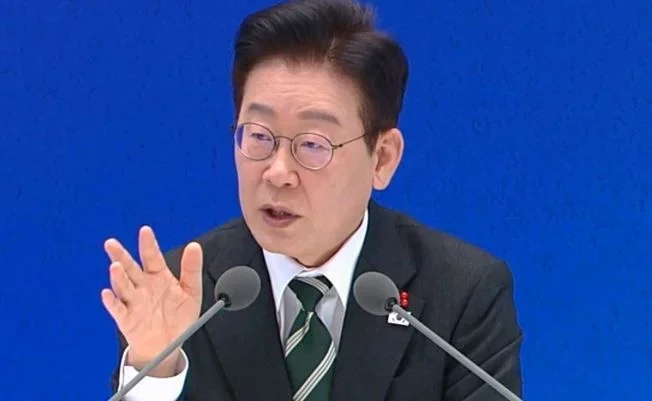
President Lee during the New Year’s Press Conference. Screenshot.
South Korea’s Presidential New Year’s message should have brought people together. Instead, President Lee Jae-myung used his January 21 press conference to issue a sweeping condemnation of religious involvement in public life. He warned that “religious interference in politics” leads to “national downfall,” likening it to armed rebellion, and promised stricter laws to eliminate it. “The current level of punishment seems far too weak,” he said, alluding to law proposals allowing for the swift dissolution of religious organizations that violate the electoral law.
He urged the use of the current investigation into the Unification Church and Shincheonji, two groups against which he called on all political parties to rally, as an “opportunity” to “root out” religious involvement in politics entirely.
President Lee claimed that Protestant churches “once did not intervene in politics,” a statement that contradicts the entire history of Korean Protestant activism, from the March 1st anti-Japanese Movement to the fight against dictatorship. He said that “there has been debate whether some Protestant churches should be investigated too. Well, legal boundaries remain unclear for now, but certain churches will be investigated if necessary.” He also referenced unnamed pastors who supposedly preached that “President Lee should die… we should kill him.”
The reference was to Pastor Son Hyun-bo, currently in jail in Busan for alleged violations of the electoral law. Yet the sermon’s passage in question—promptly released by his son and supporters on X—reveals a different story. Before Lee became president, Pastor Son declared, “Lee Jae-myung must die; I mean his greediness, his hostility, and his selfishness must die.” This was typical hyperbolic language from fire and brimstone preaching, not a call for violence. To interpret metaphor as a threat is to criminalize religious expression itself.

Massimo Introvigne with Chance Son, the son of Pastor Son Hyun-Bo.
Democracy cannot function if the state has the power to reinterpret religious speech most negatively whenever it intersects with politics. Nor can it function if the government decides which religions are “acceptable” in public life. Yet this is the direction indicated by the current rhetoric—especially when paired with the ongoing demonization of Shincheonji and the Unification Church (now called the Family Federation for World Peace and Unification), along with the unjust, harsh detention of Mother Han, the Family Federation’s 82-year-old leader who is revered as the Mother of Peace by thousands worldwide.
If individual religious figures have committed bribery or other crimes, they should face prosecution—as individuals, based on evidence. However, the wrongdoing of individuals does not strip entire religious communities of their rights. It certainly does not justify treating entire movements as political threats.
The International Covenant on Civil and Political Rights is clear. Article 25 guarantees every citizen the right to engage in public affairs without discrimination—including discrimination based on religion. Article 18 protects the right to express one’s beliefs publicly. These protections cover Catholics, Protestants, Buddhists, Muslims, and yes, Shincheonji and the Unification Church. The viewpoint of some religious supporters of the ruling party that these groups are “heretical” is irrelevant in a democracy. The state should not enforce religious doctrines.
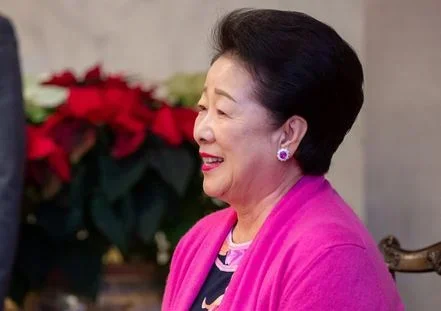
Unjustly detained: Family Federation’s Mother Han.
Across the democratic world, religious communities engage in politics. American churches mobilize on issues ranging from abortion to immigration. European Christian Democratic parties are built on explicit religious social teachings. Israel’s religious parties are crucial in its parliamentary system. People may disagree with their positions, but their participation is both legitimate and protected.
South Korea is no different. It should not be.
This protection applies not only to the majority faiths or widely accepted denominations. It encompasses all religious communities, including those that some might find controversial or unfamiliar. Theological disagreements or accusations of “heresy” should not determine who can participate in public life. A democracy that allows the state or its favored religious groups to decide which faiths are “acceptable” has already abandoned neutrality.
The principle of separating church and state exists to prevent the government from imposing a religion or suppressing one. It is meant to protect conscience, not to serve political interests. When a government begins to talk about “uprooting” religious influence, “investigating” churches for unclear reasons, or “strengthening punishments” for vague political involvement, the line between constitutional principle and ideological enforcement becomes dangerously thin.
This is not the separation of church and state. This is the state punishing religions it disapproves of.
South Korea is a vibrant democracy with a proud history of civic activism inspired by religion. That history should not be misrepresented as a threat. A confident democracy does not fear sermons, believers, or the political involvement of communities with differing beliefs. It should fear the temptation—often subtle at first—to redefine constitutional principles in ways that silence uncomfortable voices.
President Lee’s comments deserve careful, principled examination. The issue is not whether religious groups should follow the law; they must. The problem is whether the law will be changed to criminalize religious participation, especially for groups that are unpopular or theologically unfavored.
If that occurs, it will not protect democracy. It will destroy it.
Original article published in Bitter Winter Magazine